

If your house had a smell dial, would you notice the moment it turned from clean to faintly earthy, or would it take a full-blown musty room before you knew something was wrong?
Hidden mold is frustrating because it usually grows where you do not look, then announces itself in small ways that are easy to dismiss. A little odor after rain. A patch of paint that feels slightly soft. A closet that suddenly feels damp. By the time you see obvious growth, it may have already spread into materials behind walls, under flooring, or inside a crawl space.
Table Of Contents
- Why Hidden Mold Spreads So Fast Indoors
- Where Hidden Mold Likes To Hide In Real Homes
- How To Spot Hidden Mold Fast With Simple Clues
- What To Do The Minute You Suspect Mold
- Conclusion
- FAQs
In our day-to-day work at Atlanta Mold and Cleaning, we focus on the same goal you do, catching the problem early enough that it stays a manageable project instead of turning into repeated cleanup and repair.

Why Hidden Mold Spreads So Fast Indoors
Mold is not picky. Give it moisture, limited airflow, and something organic to feed on, and it will settle in. Indoors, the most common reason it spreads is that the moisture source keeps feeding it quietly. A slow plumbing drip inside a wall, condensation from an HVAC issue, or damp air rising from a crawl space can keep materials wet enough for growth to expand.
Hidden mold also spreads because people treat the surface instead of the cause. You wipe a small spot. You paint over a stain. You run a fan for a day. It looks better, so you move on. But if moisture is still present, the underlying colony continues and the visible signs return.
Here is a question that helps you think like an inspector. If you fixed nothing and simply waited two weeks, what would change, the smell, the stain, or the size of the problem? If you suspect the answer is “all of the above,” you are likely dealing with an active moisture issue, not a one-time event.
Another reason hidden mold travels is airflow. Homes constantly move air through returns, supply vents, door gaps, and pressure changes. That is why mold can be “somewhere” while the smell appears “everywhere.” Your goal is not to panic. Your goal is to narrow down where moisture is coming from, then confirm which materials are affected.
Where Hidden Mold Likes To Hide In Real Homes
You can spot hidden mold faster when you stop thinking of it as random and start thinking of it as predictable. Mold loves the same kinds of places again and again.
Behind Paint, Drywall, And Baseboards
If you see bubbling paint, peeling wallpaper, soft drywall, or a baseboard that looks swollen, treat it as a moisture clue first. Water can wick up or spread sideways. Mold may be behind the finish, even if the surface looks mostly normal.
Pay attention to walls shared with bathrooms, kitchens, and laundry areas. These are the places where leaks and small plumbing issues hide the longest.
Under Sinks And Around Plumbing Penetrations
Cabinets under sinks are classic. They are dark, they trap humidity, and a small drip can go unnoticed. Look for warped wood, a damp smell, or a persistent moisture ring on the cabinet base.
If you find signs here, do not stop at wiping the cabinet. Check supply lines, drain traps, garbage disposal connections, and the wall behind the plumbing cutout.

Inside Attics And Around Roof Entry Points
Attics can grow mold from roof leaks, poor ventilation, or bathroom fans that vent into the attic instead of outdoors. You may notice staining on roof sheathing, damp insulation, or that signature earthy smell when you pop the attic hatch.
If you only check the room where a ceiling stain appears, you may miss the actual source, because roof water can travel along rafters before it shows up below.
In Crawl Spaces And Under Flooring
If your home has a crawl space, it is one of the most common hidden mold sources. Damp soil, standing water after storms, poor drainage, and high humidity under the house can push moisture into framing and insulation. The smell often rises into living areas, especially through floor penetrations and return air pathways. This is one reason we consider crawl space work a specialization for many homes in this region.
Around HVAC Components And Ductwork
Condensate lines, drip pans, and cold ducts in humid environments can all create moisture. If you notice stains near vents, recurring dampness around an air handler closet, or a musty smell that seems worse when the system runs, HVAC moisture is worth checking.
How To Spot Hidden Mold Fast With Simple Clues
You do not need fancy gadgets to catch hidden mold early. You need a consistent method. Think of it like a quick home walkthrough where you use your nose, your eyes, and your hands to find moisture patterns.
Start With Smell And Timing
Musty odor is one of the earliest clues. The key is when it happens. Does the smell show up after rain? After the AC runs hard? When do you return home after being away? When the bathroom has been used a lot?
Try this. Close the door to a suspected room for a few hours, then reopen it and smell the air. If the odor is stronger right after opening, the source is likely inside that room or directly connected to it.
If odor gets stronger near closets, behind furniture against exterior walls, or in rooms with poor airflow, you may be seeing a moisture and ventilation pattern rather than a single leak.
Look For Surface Changes That Say Moisture
Hidden mold often comes with subtle surface changes. Paint that blisters, drywall that feels slightly soft, wallpaper that separates, or a ceiling corner that looks darker than the surrounding area are all worth attention.
Ceiling stains matter too, not because of color, but because they indicate moisture has already traveled through materials. If you have a stain, your first job is to find the source, not to repaint.
Feel For Dampness In The Right Places
Use your hand like a sensor. Feel low on walls near plumbing, around windows, and near exterior corners. Feel inside cabinets and closet corners. If a surface feels cool and slightly damp compared to surrounding areas, it may be holding moisture.
If you have a hygrometer, check indoor humidity. If you do not, your skin usually knows when a room feels clammy. Clammy air and poor airflow often go together, and that combo feeds growth.

A Quick Check You Can Do Without Turning It Into A Project
This is the only bullet section in this blog, and it is meant to be quick, not overwhelming.
- Follow your nose to the strongest area and note the weather trigger
- Check under sinks and behind toilets for slow drips and moisture rings
- Inspect closet corners and exterior walls for dampness and discoloration
- Look in the attic for staining on sheathing and damp insulation
- Peek into the crawl space for standing water, wet insulation, and odor
If you find moisture, do not jump straight to scrubbing. Moisture is the story. Mold is the result. You want to stop the moisture and confirm what materials are affected.
In a separate part of the process, mold cleaning can make sense for small, non-porous surfaces when the moisture cause is resolved. But if the source is ongoing or the material is porous and contaminated, cleaning alone will not hold.
What To Do The Minute You Suspect Mold
Once you suspect hidden mold, your choices matter because you can accidentally spread it. You do not need to panic, but you do need to be smart about containment and moisture control.
First, reduce moisture immediately. Fix the obvious leak. Stop using the fixture that seems connected to the problem. Run the bathroom fan during showers and for a while afterward. If humidity is high, use dehumidification and improve airflow. The goal is to stop feeding the growth.
Second, do not aggressively disturb the area. Ripping out drywall or scrubbing a suspicious patch can aerosolize particles and spread debris. If you need to check behind something, do it carefully and keep the disturbance minimal.
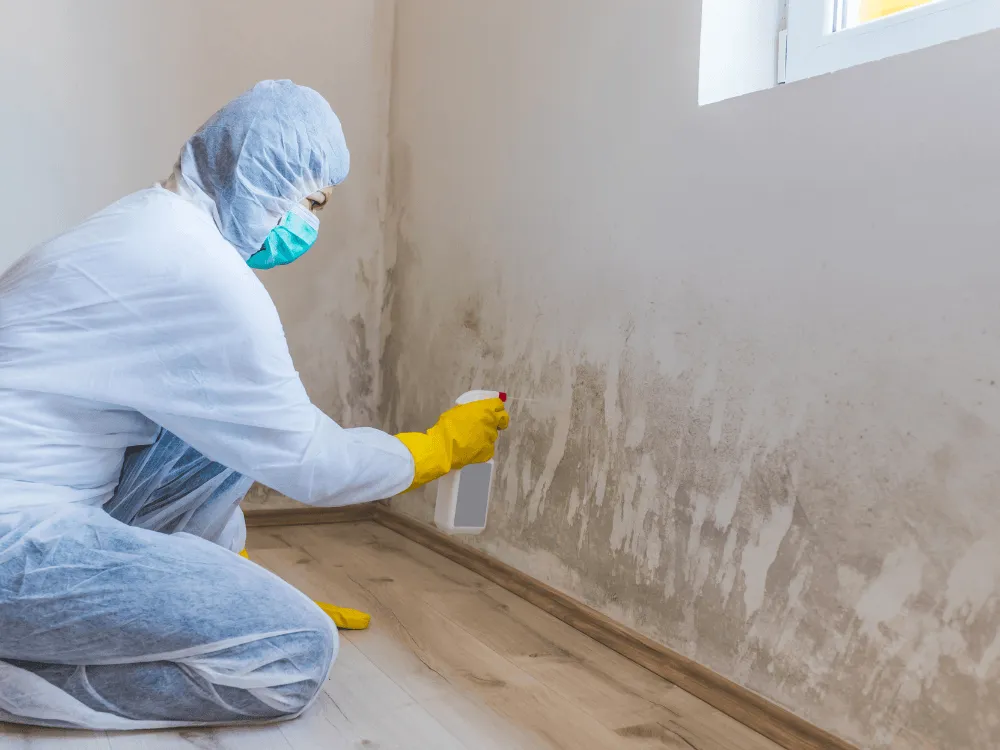
Third, decide whether this is a do-it-yourself situation or a professional situation. A small, isolated surface spot on tile might be manageable. A recurring odor, a soft wall, a ceiling stain tied to a leak, or anything connected to HVAC, attic, or crawl space moisture is more complex.
This is where a restoration expert is valuable, not because you cannot look, but because the job is not just “remove what you see.” It is to identify the moisture source, limit spread, remove or clean materials appropriately, and dry the structure so it stays resolved.
What You Should Not Do If You Want It Gone For Good
Do not paint over stains or suspected growth and assume it is handled. Do not keep running the AC if you suspect a condensate overflow that is still wetting materials. Do not ignore a musty smell that comes back after you clean. And do not assume bleach solves every situation. Bleach can remove discoloration on some surfaces, but it does not replace moisture control and proper material handling.
Here is a final check-in question that keeps decisions sane. If you fixed the moisture today, would the material you are looking at still be damaged tomorrow? If yes, you likely need removal or repair, not just drying.
Conclusion
Hidden mold spreads indoors because moisture stays hidden long enough for growth to expand before you see it. The fastest way to catch it is to follow patterns, odor that repeats with weather or HVAC use, surfaces that soften or bubble, and high-moisture zones like under sinks, attics, and crawl spaces. When you spot the clues early, you can often limit how much material is affected and reduce the chance of repeat problems.
The most important takeaway is simple. Treat mold like a moisture problem first. Find the source, stop it, dry the area thoroughly, and only then decide what needs to be cleaned, removed, or repaired. If you jump straight to scrubbing or painting, you are likely to miss the conditions that allowed it to grow in the first place.
FAQs
How can I tell if mold is hiding behind a wall?
Look for a persistent musty smell, bubbling paint, peeling wallpaper, soft drywall, or recurring stains. If odor is stronger in one corner or closet and returns after cleaning, hidden moisture behind the wall is likely.
What rooms should I check first for hidden mold?
Start with bathrooms, kitchens, laundry areas, basements, attics, and crawl spaces. These areas have the most plumbing, the most humidity, and the most hidden cavities where moisture can linger.
Is a musty smell always mold?
Not always, but it is a strong clue. Musty odor often comes from damp materials, and damp materials are exactly what mold uses to grow. If the smell persists or returns after ventilation, you should inspect for hidden moisture sources.
Can I safely clean a small mold spot myself?
You may be able to handle a small spot on a hard, non-porous surface if you also fix the moisture issue that caused it. If the area keeps returning, involves porous materials, or is tied to a leak, attic, HVAC, or crawl space, it is usually smarter to get help.
What is the quickest way to stop mold from spreading indoors?
Stop the moisture source, reduce humidity, and avoid disturbing the affected area. Drying the structure and controlling airflow are what prevent a small hidden issue from turning into a larger indoor problem.
Find Hidden Mold Early And Stop It Before It Spreads
→ Fast inspections that track moisture, odor, and likely growth zones
→ Safe containment and removal to help prevent cross-contamination
→ Drying and prevention steps so the problem does not return
Reach out to Atlanta Mold and Cleaning to pinpoint the source and fix it right.
★★★★★ Rated 4.8/5 by 71+ Atlanta homeowners for trusted mold and cleaning services


